AI SERVICES

AI Workflow Automation Services

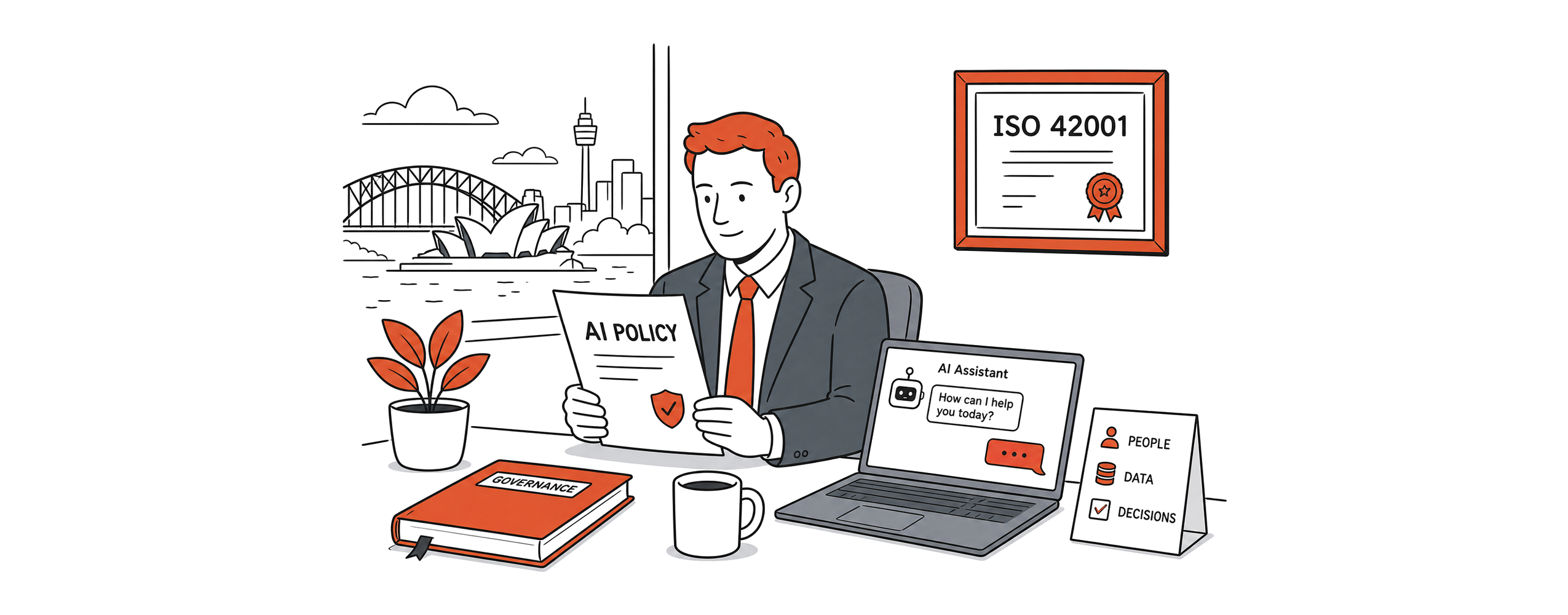
Line illustration of a TechBrain consultant reviewing an AI agent workflow that feeds documents into an approved output
OVERVIEW

What is AI workflow automation?

AI workflow automation uses AI agents to carry out multi-step business processes that previously needed a person at every stage.

Traditional rule-based automation follows fixed steps, so it stops when the input does not match the rule. An AI agent reads unstructured material instead, be it an email, a PDF, a scanned form. It handles the variation that rules were never able to reach, which is where most of the remaining manual hours sit.

At TechBrain these agents run inside your own Microsoft 365 tenancy, built on Copilot Studio, Power Automate and Azure AI Foundry, so the automation sits where your data already lives.

Most mid-market firms already pay for Microsoft 365. Many have bought Copilot licences as well. Very few have seen their labour costs move. The reason is rarely the technology.

A licence gives your staff a capable assistant. It does not redesign the intake process, clean up the data that process depends on, or decide who owns the workflow once it is live.

Those are the parts that take the hours out, and they are the parts nobody owns after go-live. TechBrain starts somewhere else.

Discovery comes first, and it answers three questions before you commit to anything. Which workflows are worth automating, what those workflows currently cost you in staff time, and what the saving is worth.

We then build the agent, transfer the intellectual property to you, and run it as a managed service so it keeps working as your process changes.

Your staff are already using AI somewhere in the business. The question is whether that use is governed, secure and actually productive. We close that unknown gap.

Is it for you?

Custom AI agents, built for your business

Not every task is worth automating, and not every task can be. The work that suits an agent is repeatable, it happens often enough to matter, and it follows a shape your team could describe to a new starter.

That usually means finance, HR, administration and first-line IT.

Every engagement opens with a no-cost discovery session that looks at your actual processes and puts numbers against them: which workflows to target, what they consume in staff time, and what the saving is worth.

You do not need any existing TechBrain services to start.

Get Started

Director view

67 %

of Australian directors already report productivity benefits from AI (AICD 1H 2026)

Unmeasured impact

46 %

of Australian SMEs using AI do not measure its impact at all (MYOB, Nov 2025)

Privacy Act deadline

10 Dec

2026 automated decision-making disclosure obligations commence (OAIC)
Illustration of an AI agent as a puzzle piece connecting documents, messages and folders inside one framework
Not an Out of the Box Solution

Built on the full Microsoft agent framework

That’s what lets an agent run multi-step reasoning, call your business systems, and follow real workflow logic instead of answering one prompt at a time.

It also settles the question most boards ask first. The agents operate solely within your Microsoft 365 tenancy, so no client data is processed outside it.

Data access is scoped to the minimum the workflow needs and reviewed every quarter. Everything is built and managed inside our ISO 27001 certified environment.


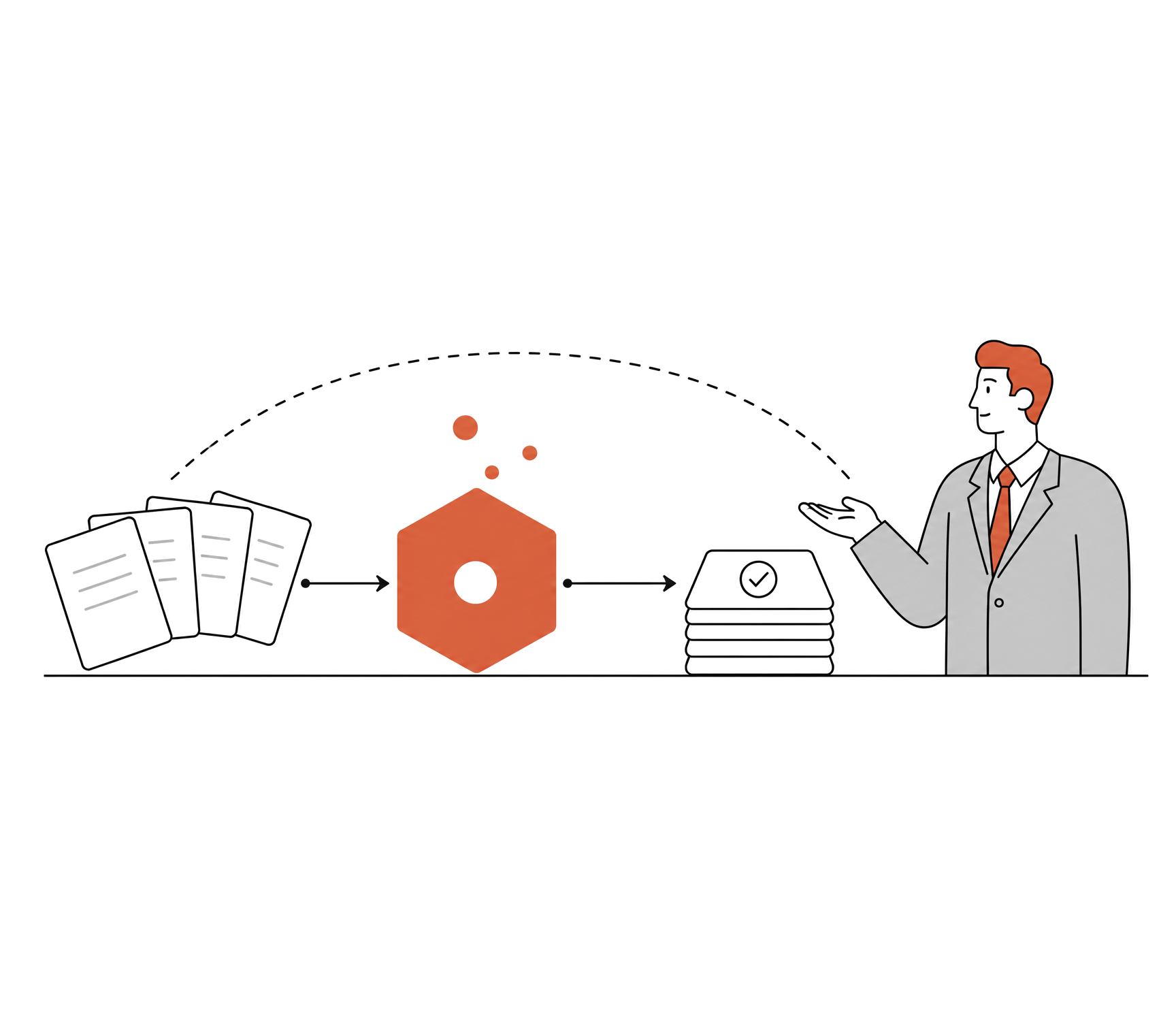
Illustration of an AI agent reading scanned documents and emails that rule-based automation could not parse, then approving the output
Business process automation, upgraded with AI

An AI agent reads the unstructured middle

Business process automation is not new.

Most organisations bought it years ago as rules, forms and approval flows, and most of those flows still break in the same place.

A document arrives as a scan instead of a form. An invoice carries a line item nobody mapped. A client answers the question in an email rather than the field.

Every one of those exceptions goes back to a person, and the exceptions are where the hours went. An AI agent reads the unstructured middle that rules could never parse.

The exception stops being the bottleneck, and the automation finally reaches the work it was bought for. That change applies across finance, HR, administration and client service.

Build, Transfer and Manage

One agreement, not a project

Most automation work is sold as a project, and a project is out of date the moment it is finished. TechBrain runs it as one agreement covering the build and the twelve months that follow. The agent is built for your business, the intellectual property becomes yours, and we keep it running after go-live.

01
The Build

A working agent inside your tenancy

Your agent is built on the Microsoft platform you already run, and connected to the systems your team already uses: Microsoft 365 data sources, SharePoint, Teams and other approved systems.
  • Scoped to a defined workflow with defined success criteria
  • Approval points designed in wherever a human decision is required
  • Data access scoped to the minimum and reviewed quarterly
02
The Transfer

The IP, transferred to you

Full intellectual property in the agent transfers to you when the build completes. It runs in your tenant, on your data, and you keep ownership of that data and everything the agent produces. There is no proprietary platform to be locked into, and nothing to migrate if the relationship ever ends.
  • Your agent, your tenant, your data
  • You retain ownership of all data and agent outputs at all times
  • No proprietary platform to be locked into
03
The Service

A managed service, not a hand-off

TechBrain hosts the agent, monitors it and maintains it. You provision nothing. The managed service runs an initial twelve-month term, with monthly performance reporting and quarterly enhancement reviews so the agent keeps pace with the process it automates.
  • TechBrain is pursuing ISO 42001 certification, the AI management standardContinuous monitoring and monthly performance reporting

The result is an asset you own and can keep improving, rather than a project that finished. Scope is confirmed at the AI Discovery Session.

OUR POSITION

Setting the Standard
in AI enablement.

We build agents that run inside your own tenancy, touch only the data the workflow needs, and leave the final call with a person. That is automation a board can stand behind and an auditor can follow.

Ashish Srivastava, Head of AI
ash srivastava
THE PROCESS

Where AI workflow automation pays off

TechBrain’s AI workflow automation can make a real difference to governance, risk mitigation and productivity across a wide range of sectors.

Legal and accounting

A document drafting agent works from your precedent libraries in SharePoint and produces a first draft in the house format. In one example use case, drafting time per document falls by 60 to 80 percent. Verification stays with the practitioner, which is the point.

Medical and allied health

A clinical admin agent handles referral summaries, appointment reminders and handover notes across medical, allied health and NDIS providers. In one example use case it recovers 5 to 10 hours a week per practitioner. AHPRA accountability stays with the practitioner, and the workflow is designed around that.

Financial services

A KYC and AML onboarding agent collects, checks and packages client information. In one example use case, onboarding time is cut by up to 50 percent. ASIC and APRA expectations now reach mid-market licensees, so the audit trail matters as much as the speed.

Mining and resources

An HSE reporting agent collates incidents, assembles regulatory submissions and prepares board safety reports. In one example use case, a monthly reporting cycle that ran for days is compressed to hours.

Finance and administration

The repeatable work sits here: invoice handling, reconciliation, reporting packs and client intake. High volume, well defined, and almost never the work anyone was hired to do.

HR and internal IT

Onboarding and offboarding, policy questions and first-line service desk requests. The same shape, in a different part of the business.

FAQ

What is AI workflow automation?

AI workflow automation uses AI agents to run business processes end to end, instead of a person handling every step. Bought as a service, it means the agent is designed around your actual workflow, built on your existing Microsoft platform, and managed after go-live so it keeps working as the process changes.

What is the difference between AI automation and traditional rule-based automation?

Rule-based automation follows fixed steps and stops when the input does not match the rule, which is why so much work still comes back to a person. An AI agent reads unstructured input such as an email or a scanned document, handles the variation, and finishes the task. That is what puts previously unreachable work in scope.

Do we need Microsoft 365 to use AI workflow automation?

Yes. An active Microsoft 365 subscription is a prerequisite, because the agents run inside your own tenancy. Copilot licensing is recommended for full capability, and is required for certain agent types. Which licences you need is confirmed at the discovery session, before anything is committed.

How long does an AI automation project take to implement?

It starts with a discovery session, then a scoped proposal, then onboarding, which takes about three weeks. Agents are deployable within weeks rather than months, because they are built on the Microsoft platform you already run rather than a new system that has to be stood up first.

Who owns the AI agents you build?

You do. Full intellectual property in the agent transfers to you when the build completes, and you retain ownership of your data and everything the agent produces at all times. The agent runs in your tenant. There is no proprietary platform to be locked into, and nothing to migrate if the relationship ends.

Who is liable when AI makes a mistake in my business?

Accountability stays with your business, which is why the design matters. Approval points are built into the workflow wherever a decision carries risk, so a person signs off before anything leaves the building. The agent also leaves an audit trail of what it did and when. For the full accountability picture, see our AI governance service.