AI SERVICES

Managed AI Security Services

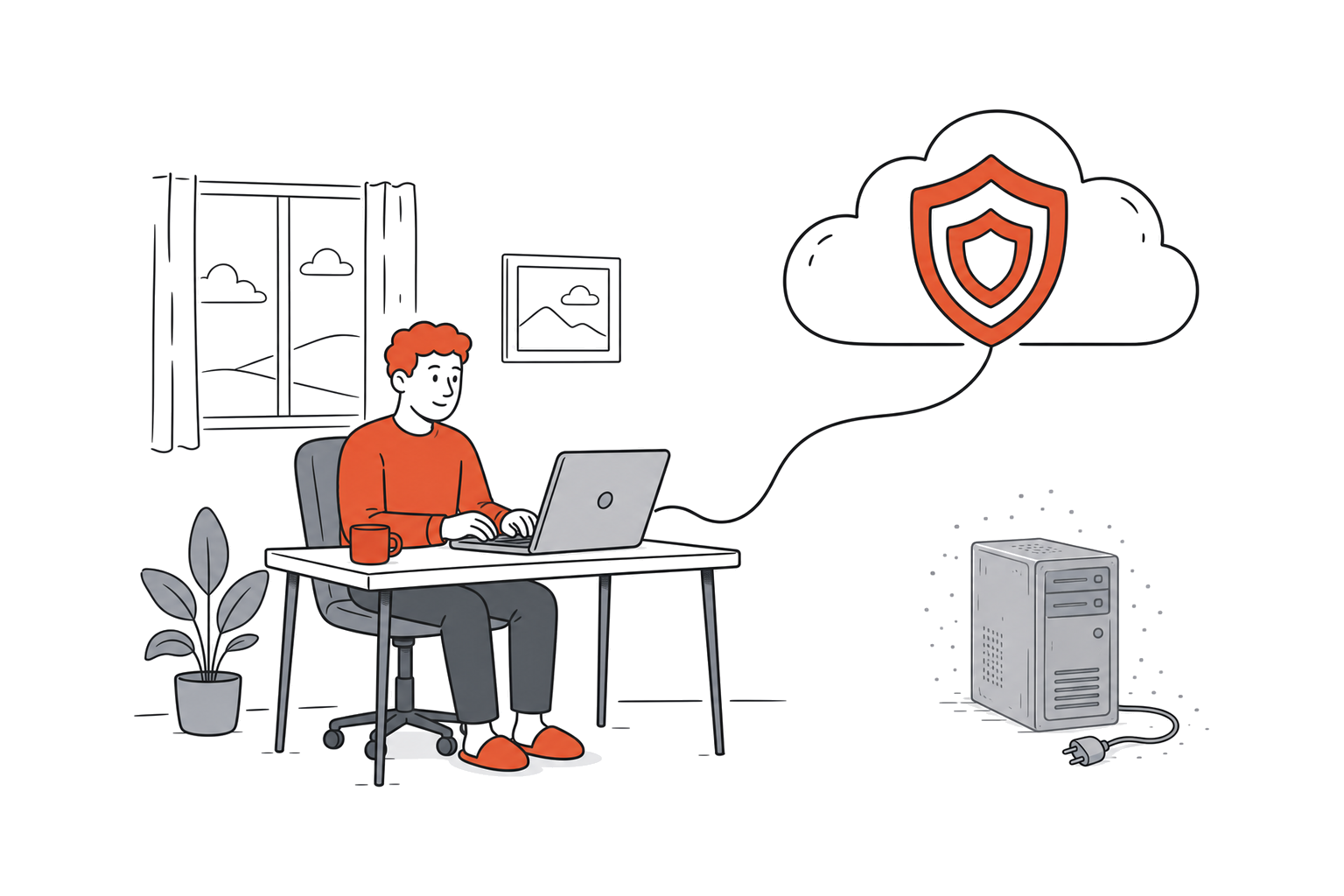
Line illustration of a person at a laptop with an AI workflow monitored inside a secure tenancy
OVERVIEW

What is Managed AI Security?

Managed AI security watches three things, the client files your staff paste into chat tools, the connections your approved AI tools make to other systems, and the terms your AI suppliers change without telling you.

That is the whole of it. Not a framework, not a maturity model. A monitored list of the places your business is already exposed by the AI it already uses.

One distinction is worth drawing early, because the market blurs it. A security operations centre that uses AI in its own analysis is not the same thing as a service that secures your use of AI.

Plenty of providers now advertise AI-assisted detection. That describes how their analysts work. It says nothing about what those analysts watch. Managed AI security is a statement about what is watched.

For most mid-market businesses the practical difference shows up in the first fortnight. A shadow AI discovery run finds tools nobody registered.

A data flow report shows where client material has been going. Neither is visible from an endpoint console, and neither needs a new framework to interpret.

The starting point

A monitoring layer, not a starting point

Managed AI security builds on top of the endpoint protection and network monitoring TechBrain already provides for you. It is a monitoring layer, not a starting point. For businesses new to TechBrain, we start with a baseline security assessment before monitoring begins.

Your staff already use AI tools at work. Most of that use was never formally approved. A written policy on its own leaves the usage running.

Accountability for AI use sits with your board and stays there. Evidence supplied by TechBrain lets your board exercise it: a written record of events, a risk trend and a point of contact.

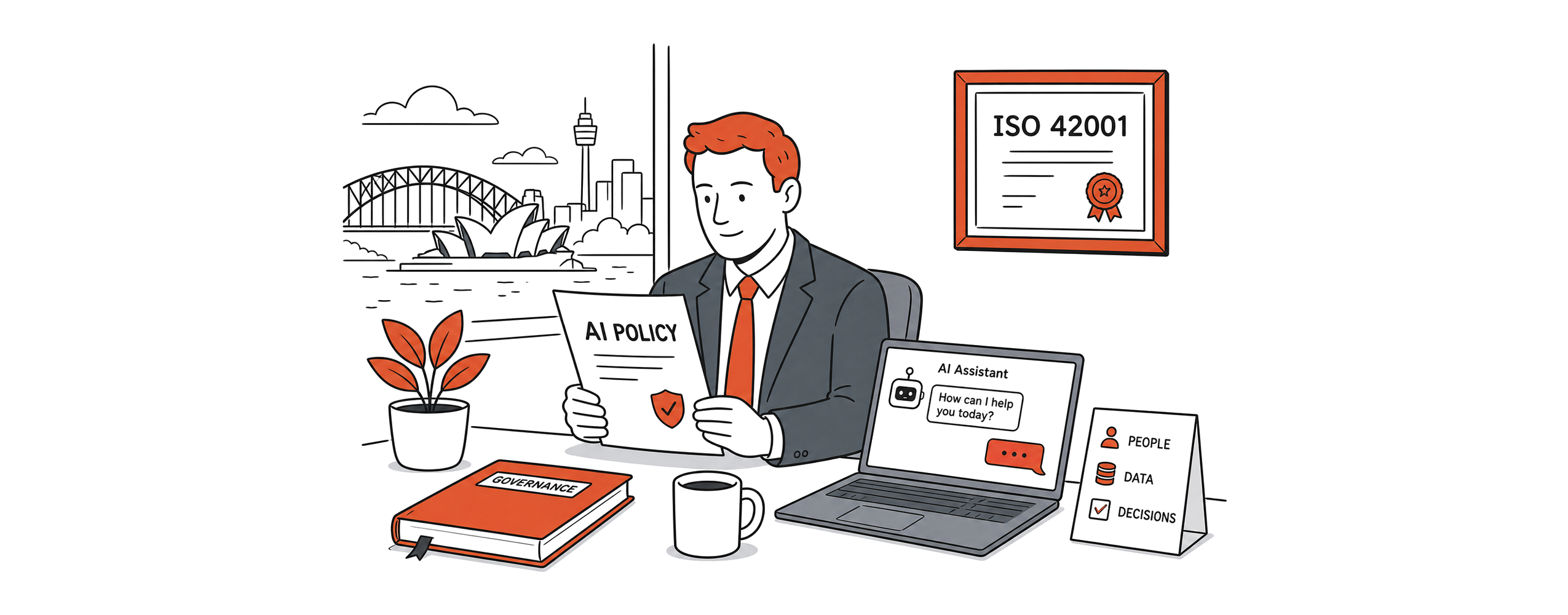
Our SOC runs under TechBrain’s ISO 27001 certification, and we are pursuing ISO 42001.

Get Started

Cybercrime Cost

55 %

One-year rise in the average self-reported cybercrime cost for a medium business, to $97.2k (ASD FY2024-25)

Rapid Adoption

45 %

Regular AI use on work devices, tripled in a year, two thirds through personal accounts (Verizon DBIR 2026)

Customer NPS

86

TechBrain customer NPS (TechBrain customer survey)
Illustration of endpoint, network and identity monitoring feeding one analyst, with personal and work AI logins side by side in a browser
An extension of your MDR, not another dashboard

What does AI actually change?

Your existing stack is built around devices, networks and accounts your business controls, and it handles those well. What it cannot see is a browser session.

Data loss prevention and cloud access tooling struggle to tell a corporate account from a staff member’s personal login on the same machine, in the same browser, minutes apart. The traffic looks ordinary, the exposure is not.

So this extends your MDR rather than replacing it. Findings feed into the same TechBrain operations centre that already handles your alerts.

There is no second console to learn and no second vendor to chase at 2am. The same analysts, the same escalation path, one more class of threat inside it.

This is a gap in coverage, not a failure of the tools you bought.

Illustration of Microsoft Copilot reaching folders across a tenant, with an analyst monitoring access
Is Microsoft Copilot secure for your business?

It makes the exposure legible

Copilot reaches whatever the person using it can already reach. So if SharePoint permissions drifted quietly over five years, Copilot surfaces that drift in the first week. It does not create the exposure. It makes the exposure legible, which is why so many rollouts stall shortly after the licences land.

The tenant boundary itself holds. Your prompts and responses stay inside your own Microsoft environment rather than training a public model, and that is worth stating plainly because it is the question most boards ask first. The harder problem sits inside the boundary rather than outside it.

Monitoring covers what the boundary does not, our analysts watch which staff are querying what, whether Copilot is reaching connectors outside its agreed scope, and whether sensitive material is surfacing to people who were never meant to see it.

Sovereign Delivery

Delivered from TechBrain's Australian SOC

Which of these run for your business, and how far each one goes, is confirmed at the AI Discovery Session.

01
The Centre

An ISO 27001 certified Australian SOC

The certification covers how your data is handled, stored and accessed, and it is audited rather than self-declared. TechBrain is ISO 27001 certified and is pursuing ISO 42001. ISO 42001 and ISO 27001 cover different ground: one governs how AI itself is managed, the other how information is secured.
  • Every analyst who sees your alerts is an Australian permanent resident
  • No follow-the-sun roster, no partner network, no queue in another jurisdiction
  • Monitoring and incident records stay in Australia for processing, storage and triage
02
The Reporting

Reporting your board and your insurer can use

Every month you receive a written summary of what our analysts saw, written for directors rather than engineers. It opens with what changed, sets out what was detected across your AI use, how the risk trend moved against the month before, and what we recommend changing in configuration or policy.
  • Incident reports built to be handed on: root cause, timeline, actions, changes
  • The shape a regulator asks for, and increasingly the shape an insurer asks for
  • Supports Privacy Act, sector regulator, insurance and client-contract obligations
03
Better Together

AI security monitoring and AI governance

AI governance and managed AI security solve different halves of the same problem. Governance sets your policy, assesses each tool before it is approved, and maintains your AI Tool Register. Managed AI security watches what actually happens on your network once those decisions are made.
  • Shadow AI findings feed straight into your AI Tool Register
  • Policy and evidence from one team, under one relationship
OUR POSITION

Setting the Standard
in AI cyber security

We watch what your people and your tools do with AI, from a SOC staffed in Australia, and hand your board a written record of it. That is oversight a director can act on and an insurer can read.

Ashish Srivastava, Head of AI
ash srivastava
THE PROCESS

The AI threats we monitor

AI use creates exposures that sit outside the reach of conventional security tooling.

Some look like ordinary traffic. Some never touch a managed device at all.

TechBrain’s SOC watches six of them continuously and reports what it finds in language your board can act on.

Prompt injection detection

Instructions hidden inside a document, an email or a web page can redirect an AI tool into doing something it was never asked to do. The user sees a normal response. We watch for the pattern behind it, with analyst triage rather than a raw alert feed.

API credential monitoring

AI integrations run on keys. Keys get committed to repositories, pasted into tickets and left in test configurations. An exposed key is a working door into your data for as long as it stays valid. Escalation the moment a live key is found.

Third-party AI service risk

Your exposure changes when your supplier changes. A certification lapses, a breach is disclosed, or the terms quietly shift so that customer data becomes training data. Terms-of-service change detection, with a view of vendor risk you can take to your board.

AI tool data flow monitoring

The most common exposure is the simplest one. Client data, source code and commercial documents move to AI services that were never approved to hold them. Patterns tracked over time, not just single events.

Shadow AI detection

Staff adopt AI tools faster than any approval process can keep up with. Network-level detection finds what is actually in use rather than what was signed off. A first-run picture of what is already in the building.

AI enabled impersonation

AI has made impersonation cheap and convincing. Generated phishing, cloned voices and deepfake video target your people rather than your systems.

FAQ

What is managed AI security, and how is it different from standard cyber security monitoring?

Standard monitoring watches your endpoints, networks and identities. Managed AI security watches what your people and your tools do with AI: the client data staff send to chat tools, the connections your approved tools make, and the suppliers whose terms change. It is delivered as a managed service from our Australian SOC, so you get analyst triage and monthly reporting rather than another console to watch.

Does AI security monitoring replace our existing MDR, or extend it?

It extends it. Your MDR is built around devices, networks and accounts you control, and it handles those well. What it cannot see is a browser session where a personal AI account and a corporate one look identical. This service adds that layer and feeds findings into the same operations centre already handling your alerts. It requires our endpoint protection and network monitoring to be in place.

How do you detect shadow AI, staff using ChatGPT or other unapproved tools?

At the network level, rather than by asking. Discovery shows which AI services are actually being reached from your environment, including on personal accounts, which is where most unapproved use sits. Nearly every first run finds something nobody registered. For clients who also take AI Governance, those findings feed straight into your AI Tool Register so it reflects reality.

Is monitoring delivered from Australia?

Yes, and specifically. our Security Operations Centre is in Australia and every analyst who sees your alerts is an Australian permanent resident. No monitoring data and no incident records are sent offshore for processing, storage or triage. That holds for the evidence you would hand to a regulator or an insurer, which is usually the part that matters most.

How quickly can AI security monitoring be deployed?

Most clients are live inside about three weeks. It is quick because the service lands on protection we already run for you rather than requiring a new stack, so onboarding is configuration rather than installation. The first fortnight is usually the most revealing, because discovery runs surface AI tools that were never registered.

Who is liable when AI makes a mistake in my business?

Liability stays with your business, and this service does not change that. What it changes is your ability to answer the question that follows: what happened, when, and what did you do about it. Detection logs and post-incident reporting give you a defensible record rather than a recollection. For the full accountability picture, see our AI governance service.